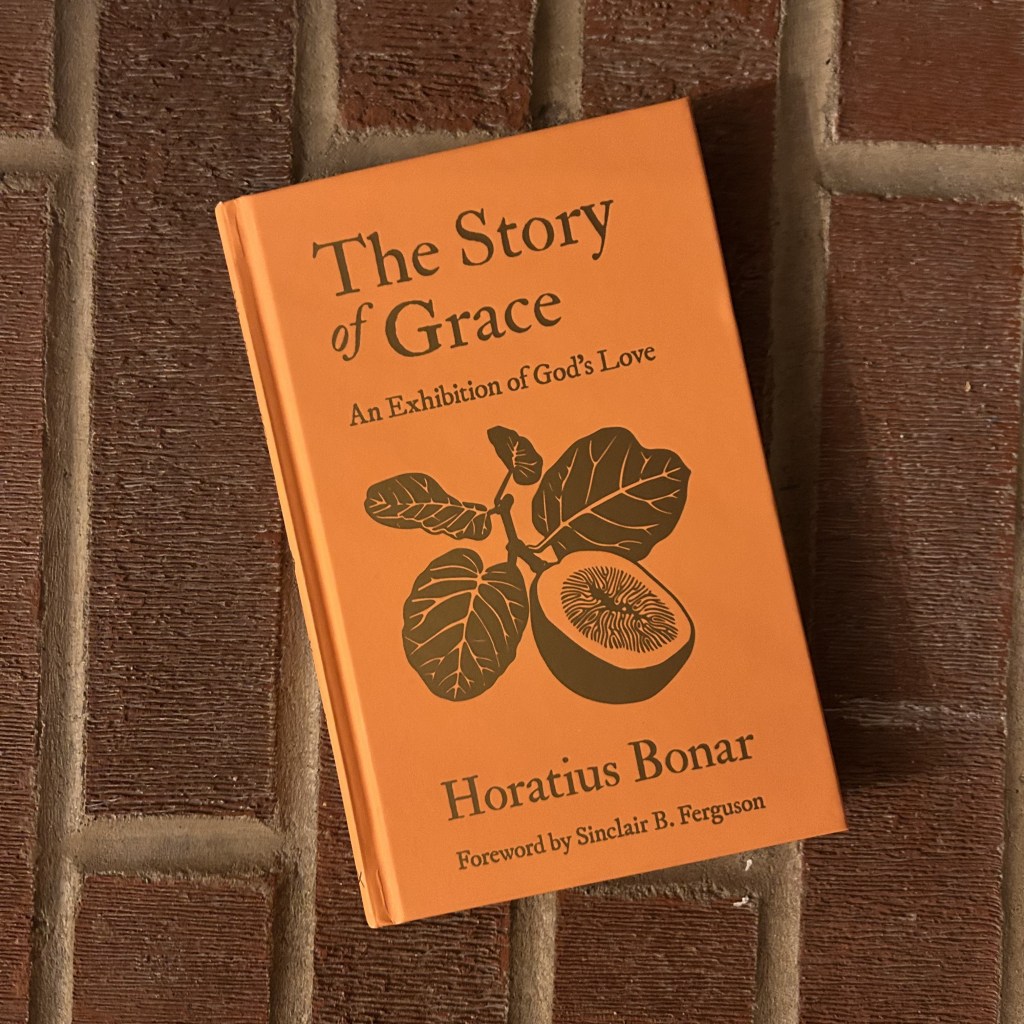
I returned from a much-needed vacation in Arizona to the best sort of mail: book mail! The first book I dove into was The Story of Grace: An Exhibition of God’s Love by 19th-century Scottish poet and pastor Horatius Bonar. This reprint of a Christian classic provided marvelous devotional reading, particularly for the beginning of a new year, and I’m thankful for the opportunity to review it.
About The Story of Grace
The Story of Grace might be considered a sort of gospel primer or refresher, but it focuses on Genesis 1-3. Revisiting the creation of the world, the fall of man, and the lives of Cain and Abel, Horatius Bonar explains how God has been at work from the beginning, revealing his goodness and grace to mankind. Even moments after Adam and Eve disobey God, God is there to promise them deliverance and hope—to show them his grace in their newfound fallenness just as he had showed them his goodness in their original blessedness.
Chapter by chapter, Bonar walks through Genesis 1-3, leaving no stone unturned. Every tiny detail in the creation-fall narrative is of interest, a means of beholding our gracious God. Bonar truly “wrings dry” these first chapters of Scripture, drawing out insight and meaning I had not previously noticed. He demonstrates how the story that culminates in the death and resurrection of Jesus Christ in the New Testament finds its roots in the first chapters of the Old Testament. This story of grace is seamless, from beginning to end.
Separated from the author by well over a century, I could yet feel his fervency. He wrote not merely to explain Scripture to Christians but to win nonbelievers and rekindle the lukewarm. What originally struck me about Bonar when I read his Words to Winners of Souls a few years ago was the urgency undergirding his words like the beat of a war drum. Likewise, his style in The Story of Grace leaves no doubt that he viewed his writing not merely as an academic exercise but as a matter of life and death. (May my belief so permeate my writing!)
That said, the tone pervading this book is at once scholarly and personable. The balance between exposition and exhortation is excellent, making this at once an intellectually stimulating and emotionally stirring read.
Strengths & Weaknesses
Overall, I am eager to recommend this book, along with Bonar’s other works. The Story of Grace is powerful, poetic, practical, pastoral, and persuasive—along with a host of other positive “p” words. It illuminates the gospel of Jesus Christ as being God’s plan from the beginning, not only to save mankind but to reveal deeper facets of his character. We are accustomed to thinking of the gospel in terms of what it does for us, but it was refreshing to be reminded of what the gospel does for God: it reveals his grace and so glorifies him.
If I am to be exceedingly particular, I could point out that some parts of this book felt a tad speculative. For example, he suggests that Eden was left in tact and visible as a reminder for Adam and Eve as to what they had lost. He also ponders at length as to why Cain’s offering was rejected and Abel’s was accepted. However, I can see why he comes to the conclusions that he does, so perhaps he is not necessarily speculating but simply reading the text with a careful eye and keen awareness of the scope of Scripture. On the whole, even when Bonar leans speculative, he does so with good reason and yields true and useful insights.
That said, as with any commentary or exposition, be sure to have your Bible at the ready to check anything that strikes you as odd. This is advice I know that Bonar himself would second.
Personal Takeaways
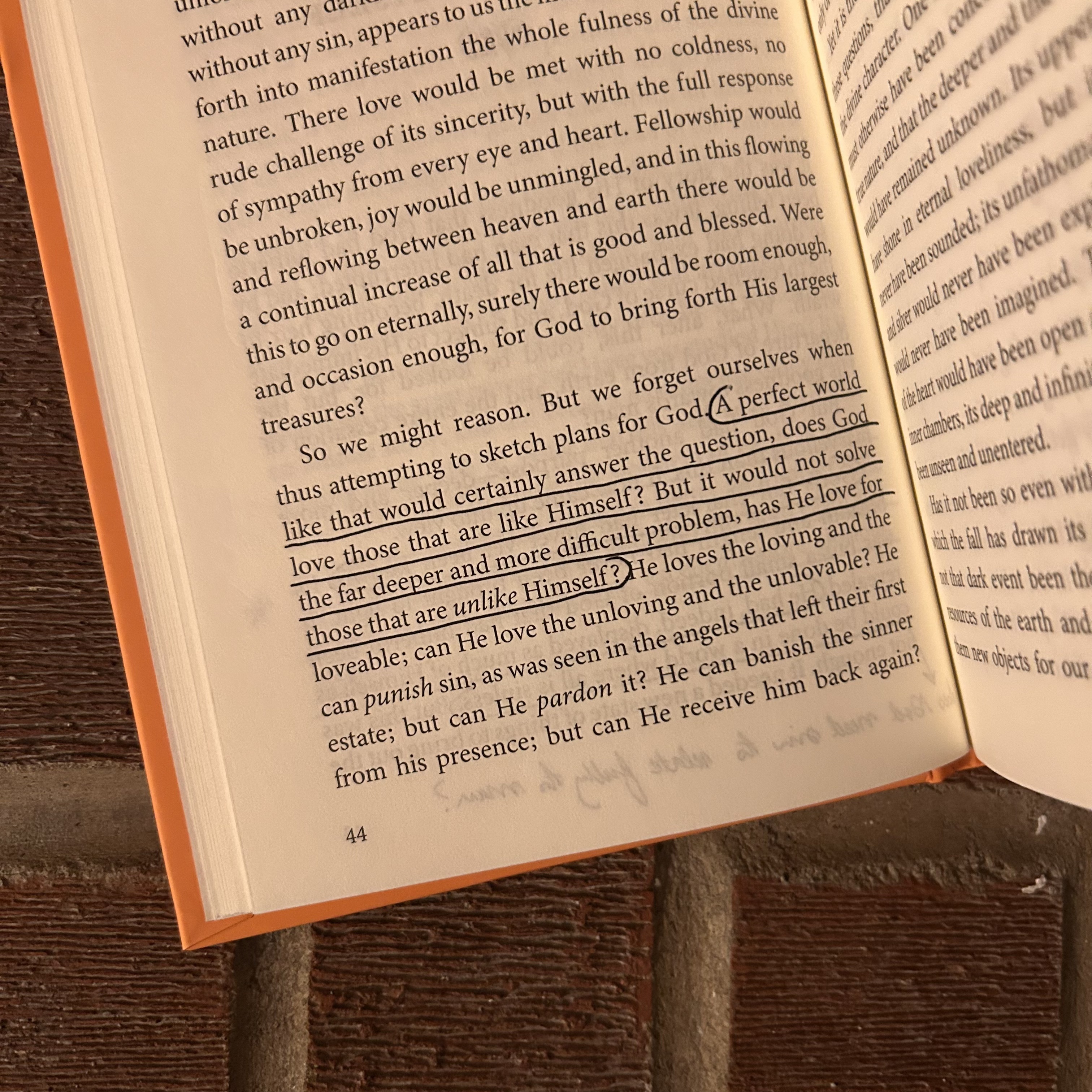
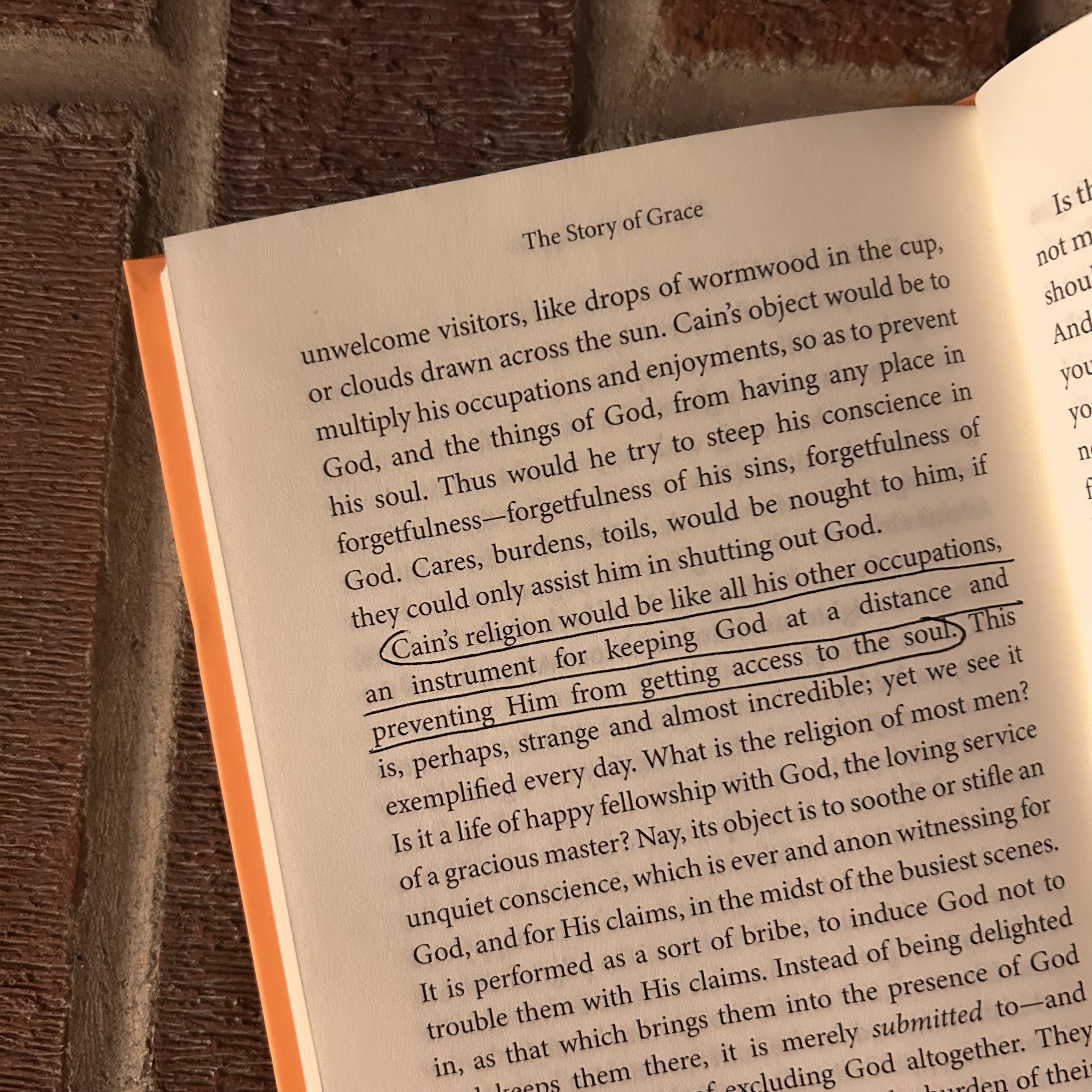
The Story of Grace left me with many insights to ponder and in many ways I felt as I did when first reading Milton’s Paradise Lost: that the old, familiar scenes in Genesis had suddenly gone from black-and-white to color. My copy is filled with underlines and annotations such as “I’d never thought of it quite like this,” “beautiful writing,” and, simply, “wow.” (I’ve attached a few examples at the bottom of this post.)
Beyond this marginalia, the thought left echoing in my heart and mind upon closing this book is this: The story of grace is the story of God.
From the beginning, God had a plan to provide for mankind. The gospel is very much good news for us. And yet, we must avoid viewing the gospel from a one-sided, man-centric position. It is not merely a story of how God saved us, but of how he has chosen to reveal himself—in all his gracious goodness.
This is an astonishing thought and it has provided a convicting perspective as I prepare to face a new year. At the end of 2025, I hope I’ll be able to say not only that God saw me through but that I saw more of him.
Recommendation
The Story of Grace was initially written for younger readers or newer Christians. It was meant to accomplish two purposes: 1) to preach the gospel, even from the earliest chapters of Scripture and 2) to persuade young people to commit themselves wholeheartedly to Christ.
That said, I would certainly encourage younger Christians to read and savor this book in all its wisdom. Pragmatically, though, I acknowledge that Bonar’s “young readers” were apparently much more literate than many of today’s more mature readers. While clear and relatively concise, this book may take a bit of extra focus and energy than contemporary writing, but it is very much worth it. After all, how are we to love the Lord with “all our minds” if we only ever read easy books?
That said, I encourage you to get a copy—if not of this specific book, then at least of another time-tested classic—and dive in with diligence. Christian Heritage, a division of Christian Focus, has a wide selection to choose from.
If The Story of Grace sounds interesting to you, consider purchasing it from Amazon using the link below. You can also purchase it directly from the publisher using this link. (This is a great option if you are planning to make a bulk purchase for a reading group or to have on hand as gifts.)
NOTE: I received a copy of this book from the publisher, Christian Focus, in exchange for an honest review.




 Ryanne Molinari