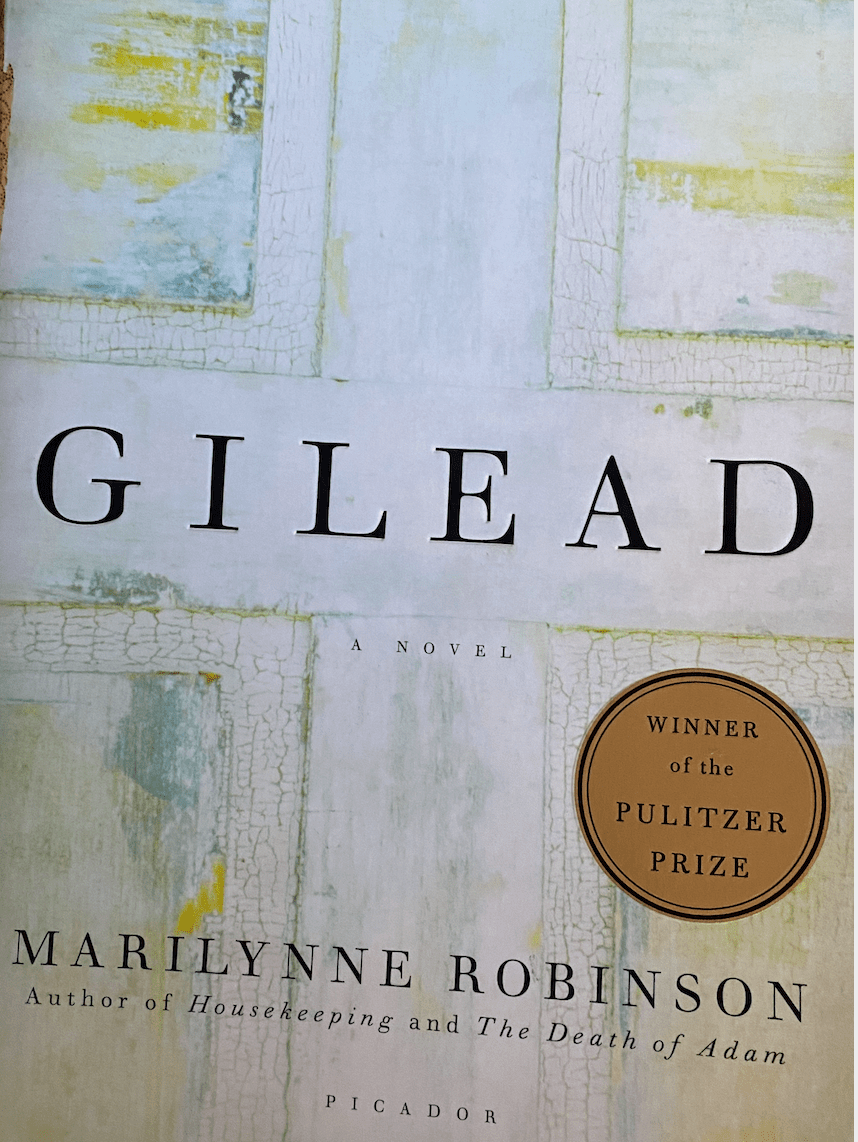
Occasionally, I become absolutely fixated on a certain book. Until I find a copy and devour it cover-to-cover, it is impossible to read anything else with any amount of enjoyment. This happened when I first stumbled upon Gone with the Wind. I had no knowledge of the story but knew it was the only book I wanted at the time. The same happened with a copy of Agatha Christie’s elusive Christmas stories and Charles Dickens’ Great Expectations.
Lately, Marilynne Robinson’s Gilead has been my obsession. I was deep in a murder mystery phase for all of November and then, out of nowhere, felt that Gilead and only Gilead would satisfy my literary craving. When I found a copy at Half Price Books and began to read, I immediately understood why that particular book was put on my mind. A novel about an Iowan pastor seems fitting for my current situation, but this masterpiece is so much more than that; it is a tale of prodigality, theological delight, and the everyday beauty that transfigures the soul.
I underlined many passages and mulled over them contentedly. When I reached the final pages, I found—at last—the line I was meant to read, the reason I was led to this book in the first place. The narrator, Reverend John Ames, considers his life and home, which are as unpretentious as the prairie upon which they are built.
To me it seems rather Christlike to be as unadorned as this place is, as little regarded.
Gilead, p. 246 (Marilynne Robinson)
This single sentence captures my thoughts exactly. I have never lived somewhere like here, here where we are far from the bustle of California, the trends of Arizona, and the academia of the United Kingdom. And yet, as I have written before and will continue to write now: I am becoming more Christlike for living, working, and worshipping in such a place. I am thankful for Gilead for further opening my eyes to this reality, and renewing my awareness of the wonder of this earthly, fleeting, sanctifying existence.


 Ryanne Molinari
Leave a reply to Robert Wilks Cancel reply