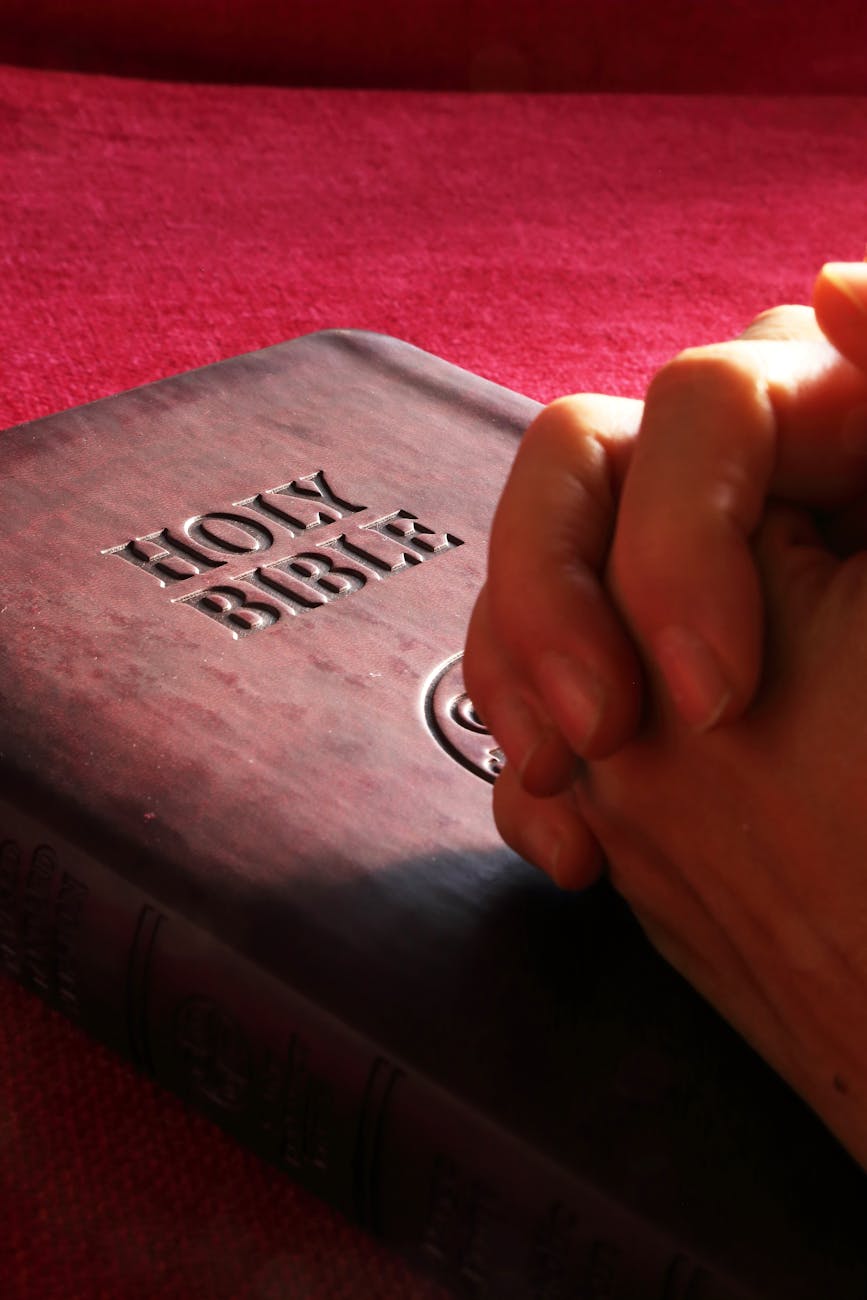
At the church where I work, we say the Lord’s Prayer every Sunday as a key part of the liturgy. At the church where I am a member and my husband is Lead Pastor, we have started saying the Lord’s Prayer as a way to conclude our services. This has been met with mostly positive feedback. Many of our members used to attend highly liturgical churches, so praying aloud as a congregation is a comforting rhythm for them. However, some other members have asked why we have started saying this prayer more regularly. Is it merely a ritual? What does it mean? What is it doing for our congregation as a whole and members as individuals?
These are valid questions—so valid, that I am sure many, many churchgoers have wondered the same thing. Thus, I thought a brief blog post might be helpful.
Is Ritual Wrong?
There is often a gut reaction in less liturgical churches against anything that rings of ritual. This often comes from a genuinely good place of not wanting our services to be filled with empty, unexamined habits. We want to worship with our minds, after all (1 Cor. 14:15). However, rituals are not in and of themselves wrong.
Most basically, rituals are ceremonial acts that follow a prescribed order. This is a neutral definition. Rituals can be bad or good, formative or deformative. Our nondenominational church might avoid highly formal rituals like processionals, bell-ringing, and written responses. But we cannot avoid regular acts and routines in our services. We cannot avoid ritual altogether. We may not follow an ancient liturgy, but our church has cultivated certain “rituals” over the years.
Going forward to take communion together is a ritual. Praying before our sermons is—though less formal—a ritual. Beginning prayer meetings with hymn is a ritual. Concluding Bible studies with prayer requests might be considered a sort of ritual as we routinely draw together not only in knowledge but in love. Closing our services with the simple line, “Have a great week; you are loved!” is a little but significant ritual.
What is important is not avoiding ritual but avoiding empty ritual. Matthew 6:7 warns against “vain repetitions,” but, at the same time, truthful and meaningful repetition appears throughout Scripture. Jesus repeats words for emphasis, the Psalms often repeat calls to praise, and the chorus in Revelation sings “Holy, Holy, Holy” on repeat forever.
It is wise to investigate rituals and repetition when their purpose is unclear. So, why do we often pray the Lord’s Prayer as a congregation? I hope I can help explain, so that you and others can pray this prayer from heart as well as habit.
Why Repeat the Lord’s Prayer Congregationally?
Worship services are training grounds. When we gather for Sunday services, we are gathering to be equipped to live as God’s people in the world. We are filled afresh with Spirit through our musical worship, we are encouraged and convicted through fellowship with one another, and we grow in the wisdom of the Word through sermons and studies. When we pray together—including the Lord’s prayer—we are doing two things. First, we are actively joining together in prayer. Second, we are learning to pray. When we pray together as a congregation, we are practicing prayer.
The prayer we know as “The Lord’s Prayer” is the ultimate template for prayer. Jesus’s disciples ask him to teach them how to pray, and he responds by telling them to pray according to the following pattern:
Our Father, who art in heaven,
Hallowed be thy name.
Thy kingdom come,
Thy will be done,
On earth as it is in heaven.
Give us this day our daily bread.
And forgive us our debts,
As we forgive our debtors.
And lead us not into temptation,
But deliver us from evil.
For thine is the kingdom,
and the power, and the glory,
Forever and ever.
Amen.
Now here is where it is right to be concerned: this prayer has indeed become rote and meaningless for so many. Too often, people treat this “Our Father” prayer as a sort of lucky charm—a spell to ward off bad fortune, to gain success, or to atone for sins. But that’s not what this prayer is; it is not a magic charm, but a Scripture-prescribed template for proper, purposeful prayer.
Let’s break it down.
Our Father, who art in heaven
This is the address, and we are too quick to bypass it for the “meat” of the prayer. But look again at how it begins! Our Father. God is our Father! He created each of us and knows the number of hairs on our heads. He gave his Son to die for us, that we might be adopted as his children and heirs. He dwells in heaven, which signifies his holiness. But let’s not forget that because he is a good, good Father, he has prepared this glorious, holy heaven as a place for his children!
Addressing God first and foremost as “our Father” reminds us that we are praying to him with familiarity. We can go to him with our deepest needs, fears, yearnings, and hopes. We can trust him to provide for us far better even than the best earthly fathers.
The Lord’s Prayer opens by reminding us of our holy, heavenly God and the tender, loving relationship we have with him through Christ Jesus. Every time we recite this prayer as believers, we remember our identity as God’s beloved children and we look to our destiny in heaven with him.
Hallowed be thy name
Our Heavenly Father is also holy, as this line reminds us. “Hallowed” is an old word for holy, consecrated, revered, or honored. This line reminds us that although God loves us as his little children, he is to be worshiped and adored as almighty.
This line also reminds us of our ultimate purpose in life and death: to glorify God. Beginning the Lord’s Prayer in this way puts everything else in perspective. It reminds us that we are in the hands of a perfect, holy, just, powerful God, and that our highest calling is to adore and magnify his name in all that we do.
Thy kingdom come, thy will be done, on earth as it is in heaven
Did you notice that this prayer for God’s will to be done precedes a prayer for his provision of our wants and needs? This line puts everything in perspective and helps us take a posture of submission. It reminds us that God is the King, not us, and that prayer is not primarily about getting our way but learning to walk faithfully according to God’s ways.
This line, though, is wonderfully gracious. When we pray that God’s will would be done on earth as it is in heaven, we are praying that his justice, peace, and glory would prevail here and now. It is a way of interceding for our communities and the world at large.
Give us this day our daily bread
Next, we turn to our individual, recurring needs. Here, we find space for supplication. We are invited to ask God to provide what we lack. This line reminds us that God is our provider; all that we have is given graciously by his hand.
We also are reminded that we must take life day by day. We are not told to pray for everything we will ever need all at once, but to ask humbly for enough sustenance for this day. This is a prayer not only for food but for faithfulness, for the strength to walk with Christ day by day, decision by decision.
And forgive us our debts as we forgive our debtors
This is the most frightening line of the Lord’s Prayer, in my opinion. I love the idea of being forgiven for my sins, but forgiving others? That’s much more difficult—and more dire. We are cautioned here that because we have been forgiven much, we must forgive much. If we withhold forgiveness from those who wrong us, have we really embraced and understood our own forgiveness? Or are we still clinging to self-justification?
Here, we are called to examine ourselves. We must repent of our sins and receive forgiveness. We must also test our hearts to see where we are failing to forgive others, and pray to be set free from our pride.
And lead us not into temptation but deliver us from evil
“Lead us not into temptation” is a powerful principle. We are not simply to avoid outright sin, but any situation that might tempt us toward sin. Here, we ask God to grant us the discernment to know which situations, shows, relationships, substances, and so on to avoid. We are asking him to help us remain watchful and to prevent us from stumbling.
The second phrase is a bit more straightforward. We ask the Lord to spare us from evil—whether this evil is sin, suffering, sorrow, or danger. We pray for him to protect our body and soul in all things.
For thine is the kingdom, and the power, and the glory, forever and ever
As we wrap up the Lord’s Prayer, we return to worship. We have moved through confession and supplication, and now continue with more adoration. We remember again that God is omniscient, omnipresent, omnipotent, and all the other “omni” words that we are not. We recall gratefully that he is in control, and that we can rest safely and trustingly in his hands. We remember once more that he is working all things together for his glory and our good.
Finally, we look to our beautiful destiny: reigning with Christ forever and ever in his glorious kingdom.
Amen
We say “amen” all the time, but rarely stop to ask what it means. Here’s what the Heidelberg Catechism has to say:
What is the meaning of the word “Amen”?
Amen means: So shall it truly and surely be, for my prayer is much more certainly heard of God than I feel in my heart that I desire things of Him (Heidelberg Catechism).
Isn’t this beautiful? We conclude this prayer as we conclude most of our prayers: with a statement of concise and complete trust in God’s sovereignty.
A Template for Prayer
We do not exclusively need to pray the Lord’s Prayer, but praying it regularly with understanding prepares us to pray in general with greater intentionality and awareness. It provides an orderly, thorough, God-honoring template for our prayer lives.
When we pray, we should begin by remembering that we pray to a loving Father, who knows what we need and will provide for us according to his heavenly wisdom. We must then remember that, in all things, our highest duty and joy is to glorify God—to worship and adore him on earth as we will in eternity. We should ask that he would use our prayers to draw our will into alignment with his. We should boldly present our needs before the Lord, trusting that he will provide for us day by day. We should humbly confess our sins, and ask him to help us show the grace of Christ to those who have hurt us. We must entreat him to teach us discernment and spare us from undue danger. Finally, we must remember that he holds all things in his hands; nothing is out of his control. His kingdom will triumph and never end. He knows what we would ask of him before we even ask it.
Amen and amen to that!


 Ryanne Molinari
One response to “Why Say the Lord’s Prayer Together?”
[…] Why Say the Lord’s Prayer Together? […]
LikeLike