I’m not sure about you, but I am existing in the limbo between Christmas and New Years when regular meals cease and I subsist on leftovers, desserts, and an occasional orange thrown in for good measure. It’s that odd in-between week, during which many of us try futilely to stick to some sort of fitness routine but before New Years Resolutions pack out our local gyms.
In short, it is not the healthiest time of year. Likely, you are thinking about the approaching New Year and setting goals for yourself. But if you’re anything like me, these goals usually just lead to disappointment and frustration. It is good to set goals and make resolutions, but these will not amount to much unless you also change your mindset.
Renewed Minds & Resolutions
I’ve been reminded over and over lately that, for Christians, any real change comes about through the renewing of our minds. We must—by the power of the Holy Spirit—learn to think like Christ if we stand any chance of living like him.
This is not only true for overtly “spiritual” endeavors like missions and ministry; it’s true for everything. This means that any resolutions we make must begin not only with altered behavior but with transformed minds. If your goal is to eat better this year, you would do well to learn to view food as Scripture presents it: a good thing to enjoy, but not everything. If your goal is to spend more time in the Bible, you need to recognize Scripture for what it is: your sustenance, not just your study. If your goal is to be more tidy or organized, you need to think through the lens of stewardship.
And, if your goal is to exercise more regularly, you will need to think about your body as an instrument of righteousness—a tool to make ready for fruitful, active service.
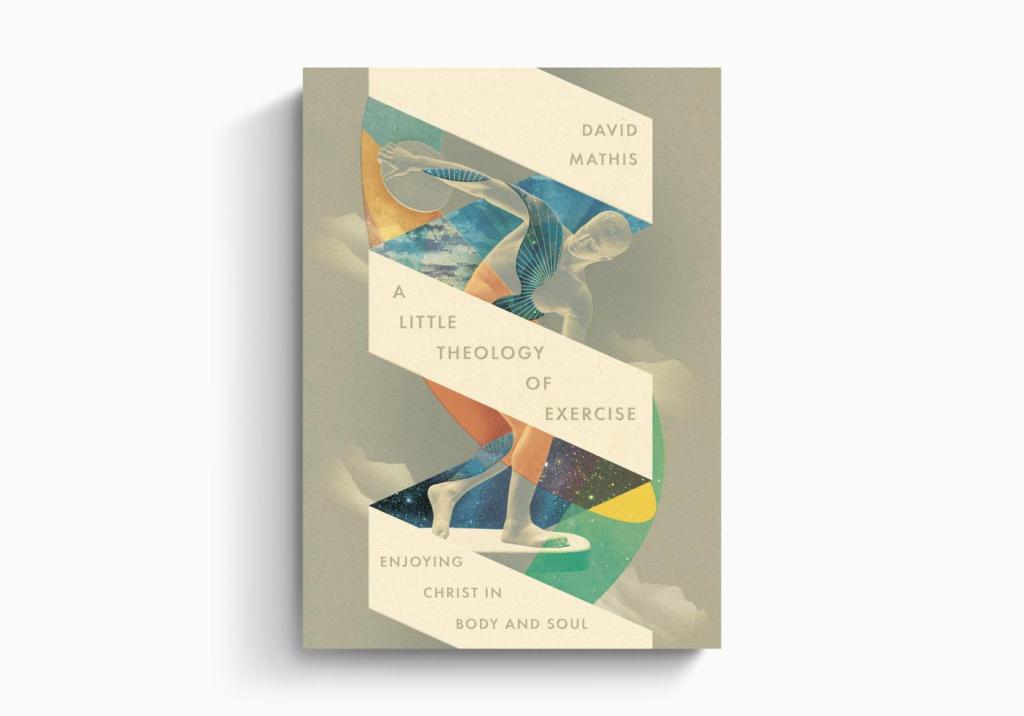
If your goals for 2026 include increasing your physical fitness, rather than simply aiming for 10,000 steps or a few more workouts per week, start by cultivating a godly view of exercise. David Mathis’s A Little Theology of Exercise: Enjoying Christ in Body and Soul is the perfect place to start. His insights will encourage you to engage your mind and heart as you strengthen your body.
About & Review
Throughout A Little Theology of Exercise, Mathis frames intentional physical movement as a a discipline that yields spiritual joy:
“Pushing our bodies can do us much good and contribute to layers of joy and contentment. God made us to move and made movement to contribute to our health and happiness.”1
Endorphins cannot replace spiritual joy, but they can enhance it! What we do with our bodies reflects and reinforces the state of our souls, after all.
Mathis marvels at human embodiment, explaining how God created us as body and soul, and pointing to the amazing ways in which God has designed us to move. Unfortunately, our technological age is also often a sedentary age. Earlier generations may not have needed to hit the gym because simply living involved a great deal of activity. But today, to steward our bodies, most of us will have to make time for intentional movement. Christians are no exception, but we are called to exercise holiness as we exercise our bodies. In other words, Christians must learn to understand and pursue fitness not for its own sake but for the sake of godliness.
“I exercise my body for the sake of my soul. I am seeking to make physical exercise serve my spiritual joy in God. I want to leverage the body God gave me for my joy in him to his glory and the good of others.”2
Accordingly, Mathis points out that “fitness” implies being fit for something—not just looking a certain way. Christians should, then, pursue physical fitness to the best of their abilities so that they are fit for ready, lasting service. This approach is convicting for both the sedentary and the exercise fanatics. Christ-centered fitness means that caring for our bodies through regular exercise is a priority, but it is not paramount. To give a practical example, a Christian approach to exercise would likely lead us to prioritize regular cardio so that we can worship and serve with energy, but it would probably not cause us to lose sleep over not having six-pack abs.
Review & Recommendation
I love exercise. I freely admit that I am a much more pleasant and reasonable person after I’ve gone for a run—so much so that I try not to make any big decisions until I’ve thought about them while running or walking. I admit that I expected this book to be a pat on the back, affirming my commitment to fitness. But I found myself not only encouraged but challenged by Mathis’s writing. I realized that I often fail to frame fitness as purposeful. This book reminded me that I should not approach exercise simply for the sake of accomplishment or aesthetics, but to become a healthier, stronger, more joyful servant of Christ. I should strengthen my body not simply so I feel good, but so that I am better prepared to do good.
I am particularly encouraged now as I am having to take some time off of running due to injury and pregnancy. Within a biblical view of exercise, I do not need to workout every day to be valuable. I can rest. I can recover. I can turn my body to useful tasks other than logging miles and generating endorphins. A Little Theology of Exercise has provided me a more gracious view of exercise as important, but not everything. As Paul writes to Timothy:
“…for while bodily training is of some value, godliness is of value in every way, as it holds promise for the present life and also for the life to come.” – 1 Tim. 4:8
I hope that, whatever stage of fitness or season of health you are in, you will consider reading this thoughtful little book. Whether you are an exercise enthusiast or struggle not to be sedentary, it is sure to motivate you to care for your body as you renew your mindset.
Purchase Information
If A Little Theology of Exercise sounds interesting to you, you can purchase it from Amazon using this affiliate link, or from Crossway. I enjoyed both the print and audio versions. Perhaps you, like me, would enjoy listening to this book while you exercise! If so, consider purchasing it from Crossway, as their annual audio and ebook sale starts today and lasts until January 7th. You can get this book—as well as many other quality resources—for as little as $2.99.
Thank you for reading! If you have not already, consider subscribing for free using the box below. This is the best way to support my writing and to ensure that you don’t miss new posts.


 Ryanne Molinari
One response to “A Little Theology of Exercise: Enjoying Christ in Body and Soul”
[…] A Little Theology of Exercise: Enjoying Christ in Body and Soul […]
LikeLike