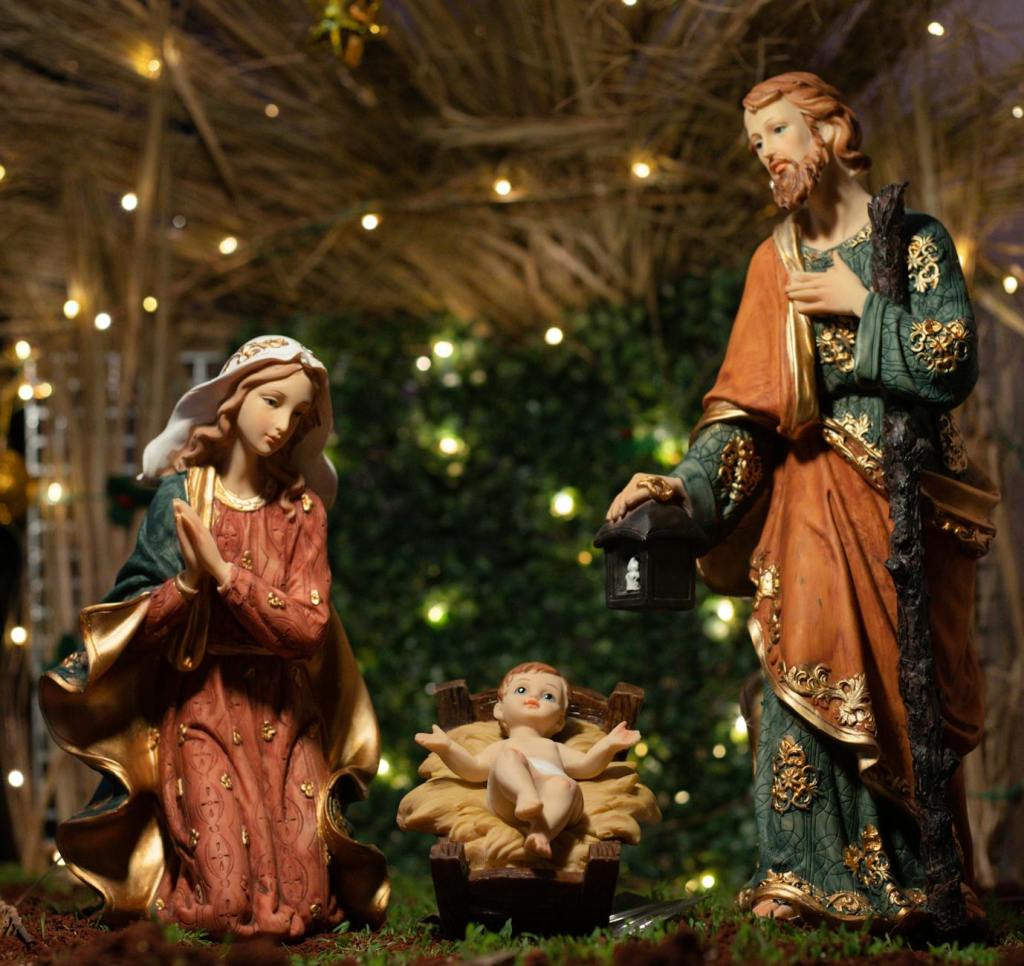
This time of year, it’s popular among Christian social media users to bash the song, “Mary, Did You Know?” I’ve seen so many variations of the following Tweet, some clever and some rather crass:
“Mary, did you know?”
Yes, she knew. Stop asking.
I have even heard the song described scornfully as “mansplaining.”
But I continue to love this song, and believe it’s okay if you do too.
So, let’s take a moment and seriously ask: What did Mary know? Is this song completely inaccurate? This article from Logos by Robby Lockett is the most helpful resource I’ve found so far. In it, he argues that Mary, being familiar with messianic prophecies, would have known quite a bit about her Son. Based on her song in Luke 1:46–56 alone, it is clear that Mary grasped the broad implications of who he would be. It seems that she was a sharp and scripture-saturated young woman, so it is not a leap to assume that she would have known certain things about Jesus in advance—including his ability to heal the blind, his role in delivering her people, and even his divinity.
Marveling Mary
Although Mary would have been able to glean much about the coming Messiah from Scripture, she is repeatedly awestruck and even baffled by her Son. After presenting Jesus at the temple, she and Joseph “marvel” at Simeon’s prophecy regarding him. “Marvel” here means to “wonder” and, by implication, to “admire.” Mary appears surprised by what Simeon says regarding her Son, who is to be a light not only to her people, Israel, but also to the Gentiles! (Luke 2:29–35).
Then, just a few verses later, when twelve-year-old Jesus goes missing, Mary and Joseph look for him frantically. Finding him in the temple, they are “astonished”—again, a word that conveys wonder and amazement. Jesus explains that they should not be surprised; wasn’t it only natural for him to be in his Father’s house? And yet Mary, who knew her Son’s divine origin better than anyone, does not understand what he means. Instead, she “treasures up all these things in her heart.” In other words, Mary observes and ponders and learns about Jesus as he grows (Luke 2:41–52).
So, in a very real sense, Mary did not know. At least, she did not know everything, and certainly not fully or perfectly. And how could we expect her to without falsely ascribing to her Godlike omniscience? How could any woman—no matter how smart or faithful—anticipate every particular movement and ministry of the Incarnate Son of God? After all, as John later writes, all that Jesus did and said while on earth could not be contained in books, even if the whole world were a library (John 21:25).
Knowing and Knowing
A particular weakness of the English language is its single word for “know.” I remember studying Spanish and being delighted to find that there are two types of knowing with two distinct words: saber, which refers to knowing facts or information, and conocer, which is more intimate, concerned with knowing people, places, or things through experience or acquaintance
I often wish that we had such a distinction in English, but we have to make due with our blunt, multipurpose “know” for both types of knowledge: intellectual and experiential, head and heart, faith and sight.
Mary knew by faith who her Son would be and what he was destined to do. But did she know-know? She knew he was the Son of the Most High and destined to reign over the house of Jacob forever, but she clearly did not fully grasp all that this would entail (Luke 2:32–33). She knew Jesus and his mission, but came to know-know her Son and his gospel in a deep, painful, personal way (again, see Simeon’s prophecy in Luke 2:35).
Mary had faith from the beginning and, as she watched Jesus’s growth and ministry, that faith became sight. Anticipation became experience. Knowing became knowing. So, for example, while Mary likely trusted that Jesus could—and would—bring sight to the blind, she had yet to actually see him do so. She knew in part, but came to know in full (1 Cor. 13:12).
Sing On
All this to say, I will continue to enjoy “Mary, Did You Know?” this Christmas season and in the years to come. I believe this song is true to the character of “marveling” Mary as a faithful, knowledgeable woman whose belief became sight as she watched her astonishing Son grow, minister, die, and rise again.
But aside from what this song says about Mary, it preaches Christ clearly and boldly. It proclaims him not only to be a sweet baby in a manger, but the all-powerful Messiah—our one source of redemption, renewal, and resurrection, the very Son of God made flesh.
So listen and sing on. Enjoy this song. Marvel with Mary. Anticipate with her the joy of when your faith shall become sight.
P.S. My graciousness does not extend to “The Little Drummer Boy.” If anyone tries to bring a drum to the birth of my son, he will be met with a very, very cold audience.


 Ryanne Molinari
One response to “Why I Still Love “Mary, Did You Know?””
[…] Why I Still Love “Mary, Did You Know?” […]
LikeLike