Group projects were the bane of my life throughout school. I would work myself into a frenzy, usually with one other enthusiastic peer and a bunch of—let’s just be honest—freeloaders who received the benefit of my grade without suffering the turmoil of my toil. I also disliked parties, usually finding ways to not attend if I could help it and, eventually, convincing my parents that I did not want birthday parties for myself anymore.
Church, then, represented something of a perfect storm. A weekly gathering that involved co-laboring and communal celebrating? I protested that I could learn more about the Bible independently, perform acts of service on my own time, and find more refreshment on Sunday mornings in solitude.
Fortunately, my family was never convinced. Nor, really, was I.
I knew in my soul that church attendance mattered. Moreover, church participation mattered. As my pastor husband said on Sunday, “Christianity is not a spectator sport.” I could not live the Christian life solely ensconced in a solitary study. I could not learn the heart of genuine service by doing everything on my terms and in my timeline.
So to church we went. Even when I felt like an outsider in a cliquey youth group. Even when serving on the worship team meant playing songs I didn’t know or love. Even when sitting through a sermon meant enduring the unyielding metal of folding chairs, which we then had to stack after the service.
But actively participating in church was worth it, even—and, really, especially—with these discomforts. My brother and I learned not only patience as we endured various minor discomforts but discovered the immense privilege of being part of a body of believers. I can count on one hand the number of times I have missed Sunday services in the last several years—and all of these are because of illness or travel.
Weekly church attendance and regular church involvement have become necessary rhythms in my life—not merely because my Lord (and my vocation) requires them but because they are health to my bones and strength to my spirit. My church family serves me and lets me serve them. They draw me out of myself. We share meals and joys and griefs. We ask and give forgiveness. We check in on one another during absences and rejoice in reunions. We encourage one another with Scripture and are challenged by the same sermons.
For all the difficulties of church life—and there always will be some this side of eternity—I know that I would be much more callous, lonely, sickly, pessimistic, selfish, stingy, and arrogant were it not for regular involvement in a local church body.
In short, second to receiving Christ as my Lord and Savior, committing to his Body and Bride has been the best and healthiest blessing in my life. (And, really—as in any good marriage—Christ and his Bride cannot be separated. You cannot really have Him without her.)
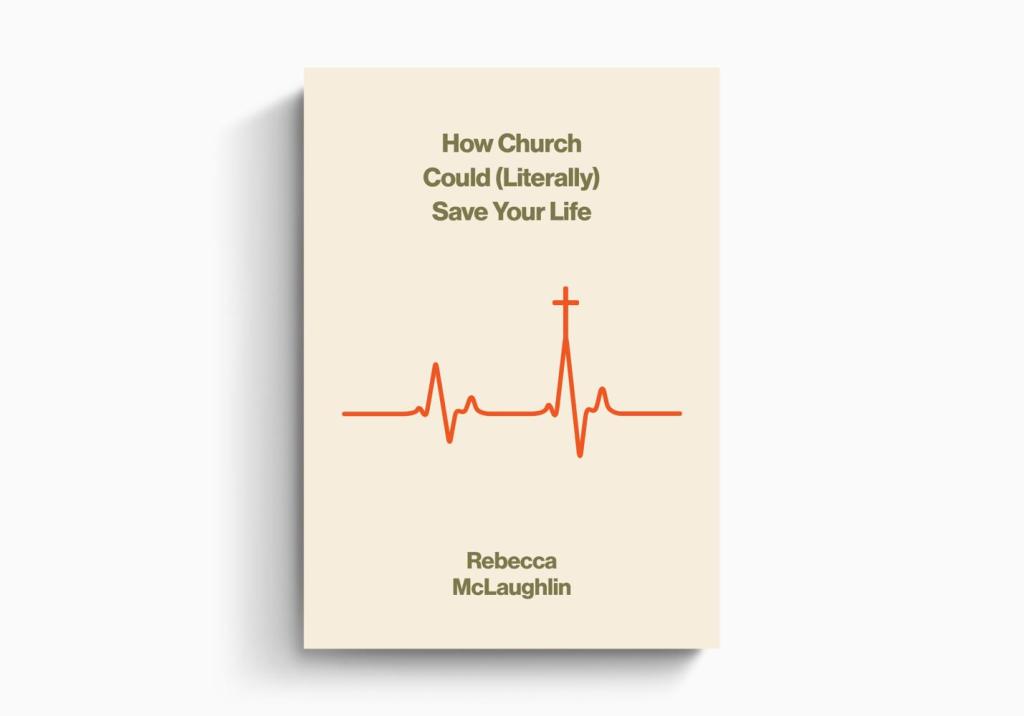
This is exactly what Rebecca McLaughlin captures in her wonderful little book, How Church Could (Literally) Save Your Life.
About
How Church Could (Literally) Save Your Life considers the ways in which regular church participation benefits our mental, physical, moral, and spiritual health. Going beyond speculation, this book provides scientific data indicating a strong correlation between religious involvement and both quality and longevity of life.
I immediately wanted to read this book because it is by Rebecca McLaughlin, whose style is at once academic and accessible. McLaughlin holds a PhD in English Literature from Cambridge, as well as a degree in theology from Oak Hill College, London. She writes with grace and intelligence, and I’ve heartily enjoyed her other books, including Confronting Christianity, Jesus Through the Eyes of Women, and The Secular Creed.
Although tremendously encouraging for active church members, this book specifically addresses those who have fallen away from and those who are skeptical about church participation. Gently but definitively, McLaughlin presents the evidence for church involvement as an overlooked but significant contributor to overall health. She points out how the “listicles” that populate the internet—peddling “The 7 Keys to Longevity” or “21 Healthy Habits to Improve Your Physical and Mental Health”—frequently fail to include this clear, evidence-backed contributor to longevity and quality of life: Go to church.
I was reminded of what Bill Bryson says about exercise in his delightful book The Body: A Guide to Occupants:
“If someone invented a pill that could do for us all that a moderate amount of exercise achieves, it would instantly become the most successful drug in history.”1
The benefits of regular, even gentle, exercise are disproportionately great. Most people recognize this, even if they do not act on it. Church attendance can also be likened to something of a miracle pill. McLaughlin cites Harvard School of Public Health Professor Tyler VanderWeele and journalist John Siniff, who write:
“If one could conceive a single elixir to improve the physical and mental health of millions of Americans—at no personal cost—what value would our society place on it? Going a step further, if research quite conclusively showed that when consumed just once a week, this concoction would reduce mortality by 20% to 30% over a 15-year period, how urgently would we want to make it publicly available?”2
This miracle prescription is this: go to church at least once a week.
Isn’t it astonishing that online lists would overlook such a simple suggestion? And one backed by a Harvard health expert, at that?
Review
The rest of How Church Could (Literally) Save Your Life continues along such lines, providing compelling evidence for the overall healthfulness of church involvement. My one concern would be that, while McLaughlin provides resources for finding biblical churches, readers might fall into either 1) believing any church is worth attending or 2) attending church simply for its benefits, rather than out of the desire to honor God and be with His people. But, then again, if the desire to live a healthier life drives a person into a church where he or she is confronted with the gospel, how can I do other than rejoice?
That said, I wholeheartedly recommend this book to you—whether you’re already an enthusiastic member, struggling with disillusionment, or have never willingly set foot in a church. It took me about an hour to finish, so I urge you to pick up a copy of this little book and read it with an open mind and humble heart.
Purchase Information
How Church Could (Literally) Save Your Life can be purchased on Amazon, directly from Crossway, or anywhere else you order books. Compact and accessible, it might be worth ordering several copies so you can pass them out to those interested.

Note: I received a copy of How Church Could (Literally) Save Your Life from Crossway in exchange for an honest review. Additionally, any purchases made using the Amazon links in this post help cover the costs of maintaining this blog.


 Ryanne Molinari
One response to “How Church Could (Literally) Save Your Life”
[…] How Church Could (Literally) Save Your Life […]
LikeLike