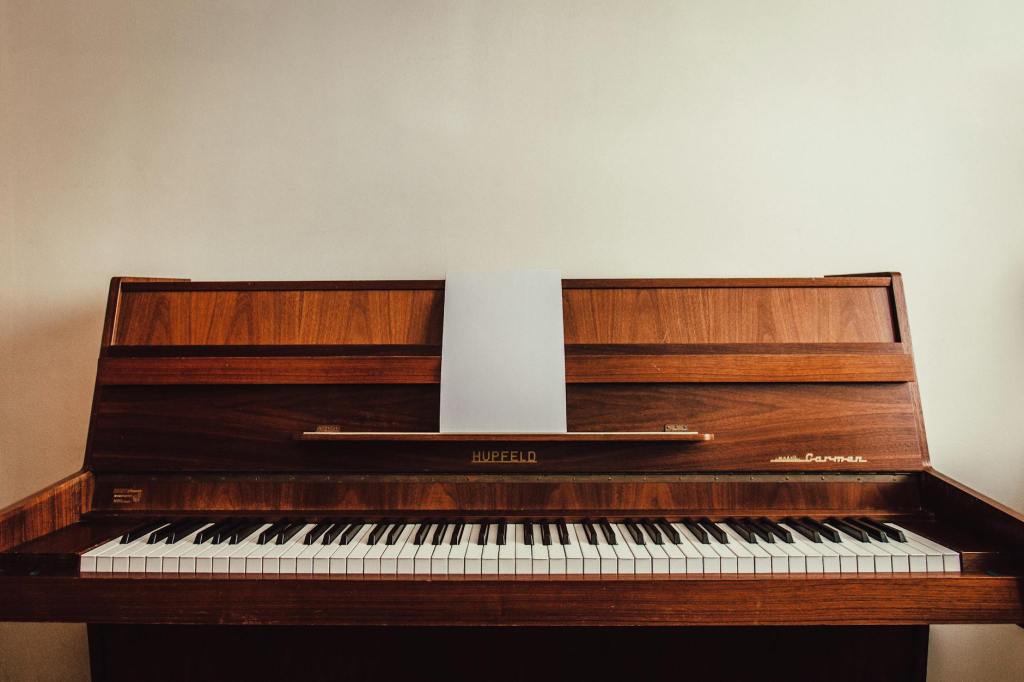
Today was my last day of teaching piano—at least for now. I’m continuing to teach organ on the side, but needed to refocus my priorities in anticipation of my book’s release, dissertation prep, and increasing ministry commitments.
This season of teaching ended in the best possible way: one of my students performed his first recital and absolutely knocked it out of the park. At only seven years old, he practiced diligently, dressed up of his own accord (in a suit, no less!), and handled the whole day like a pro.
In Gen Z terms, he understood the assignment.
As I drove home, I thought about my few years of experience as a piano teacher and my many more years of experience as a piano student. I do believe that even if I never touched a piano again in my life, taking lessons (and taking them seriously) made me who I am today.
Practicing after school as a child when I wanted to watch cartoons or read fun books taught me that I had to put work before play. I learned not to procrastinate and to cultivate productive habits. It became so that I could not skip more than a few days of practicing without feeling an actual ache in my hands.
Squeezing in practice sessions alongside school clubs, service projects, and AP classes in high school forced me to learn to manage my time well. I have vivid memories of practicing in a backstage closet during lunch hours or in the slim gap between my last class and first extracurricular.
Competing for limited practice rooms in college made me better at focusing. I had no option but to tune out the singers next door, the brass players down the hall, and the (seemingly) carefree students laughing as they passed my window.
Taking piano made me scrappy, stubborn, and scheduled. I hope that my students will continue their studies, but I take comfort in the fact that even they do not, they are more mature little humans than they were before—not necessarily because of me but because of the demands of piano lessons.
Reasons to Start Piano Lessons
Today’s recital represented the most obvious joy and benefit of piano lessons: learning to read and play music with ease and confidence.
But even for students who are not overly or naturally musical, piano lessons provide a marvelous opportunity for development. Whether or not my students remember the exact pieces they learned under my tutelage, I like to think that they are leaving my studio with increased problem-solving skills, better memories, greater self-control, and enhanced coordination.
Again, while today was a delight, perhaps the greatest reward from the last few years of teaching was watching one of my little students learn to cope with anxiety. When he first began lessons, he would fight back tears upon hitting a wrong note or forgetting a phrase. Gradually, though, he learned to “reboot” (I used video game language to help him understand the concept). By the end of our time together, he knew that a wrong note was not the end of the world. Instead, all he had to do was “reboot” by removing his hands from the keys, taking a deep breath, and trying again.
All this to say, if you or your child has even the smallest interest in music, I’d encourage you to take a year of piano lessons. The payoff extends far beyond simply being able to play “Ode to Joy”—although that is, of course, a nice bonus. A year of intentional lessons may produce the following, as it has in my experience as a student and teacher:
- Better fine motor skills
- Improved reading skills
- Better posture
- Greater self-control (physically, emotionally, and mentally)
- Increased focus
- More orderly habits
- The ability to make and meet goals
- Improved social skills, particularly when it comes to interacting with adults
- Enhanced problem-solving skills
- More attentive listening (both to music and speech)
For Christian students, piano lessons may also offer a deepened appreciation and understanding of musical worship, as well as the ability to serve in worship ministry.
What about other instruments? I’m actually trying to encourage one of my former students to take up choir. He has a lovely voice and learns better by hearing than reading. Still, I think starting with piano was his best choice. Piano requires students to read music in both bass and treble clef, as well as to increase their fine motor skills with both hands. Moreover, reading two lines of music and using both hands simultaneously literally balances the hemispheres of their brains!
Piano was my first instrument, and it prepared me to sing in a choir and to learn violin, guitar, ukulele, and organ with greater ease. A year or so of piano lessons provides an unbeatable musical foundation for transitioning to other instruments or ensembles.
When to Stop Piano Lessons
When I began piano lessons, it was clear right away that it was going to be not just a hobby but an obsession. Music immediately became my main focus apart from reading and writing. Only a good book could keep me from practicing, and even then I usually just tried to read and practice at the same time. Once, my parents enrolled me in tennis lessons at the community center. I don’t recall ever hitting a ball, but I did find that the racket made a rather nice air guitar.
So my parents let me quit sports and encouraged my musical endeavors with greater zeal.
Meanwhile, my brother took piano lessons too. However, he found clambering around on the bench far more interesting than learning his scales. The piano was an excellent fort for hiding under when his teacher tried to make him work.
So my parents let him quit piano and, per his request, take taekwond0. He earned his black belt before leaving elementary school. Martial arts was his thing. Music lessons were mine.
And you know what? While my brother could not play Chopin, learning to chop bricks in half with his bare hands taught him the same non-musical (and more important) lessons that piano taught me. Taekwondo taught him time management, focus, physical self-control, and mental discipline. It helped him relate to people of different backgrounds and cultures. It taught him to be a respectful follower and capable leader.
So, if you or your child find after a year (or more) of piano lessons that it is just not your thing, quit.
It’s okay.
I, a music teacher and professional pianist, am giving you permission to quit piano lessons—and to not feel bad about it.
Quitting piano lessons does not make you a bad student or a bad parent. It just means that piano is not your thing, and that is 100% okay.
But don’t quit altogether.
Find something that makes you eager to practice. My brother loved martial arts so much, he couldn’t stop practicing his forms—just like I could not go more than a few days without practicing piano. Find something—whether it’s piano or taekwondo, cross country or choir, disc golf or speech team—that will contribute to your (or your child’s) maturity and do it wholeheartedly.
Moving Forward
As my students leave my studio for the last time, my prayer is that those who love playing the piano will grow into mature people through continued lessons and that those who merely like piano will find what they truly love and mature through that means.
After all, while piano is my favorite instrument, it is just that: an instrument.
It’s how you use it that counts.
After all, while piano is my favorite instrument, it is just that: an instrument. It’s how you use it that counts.


 Ryanne Molinari